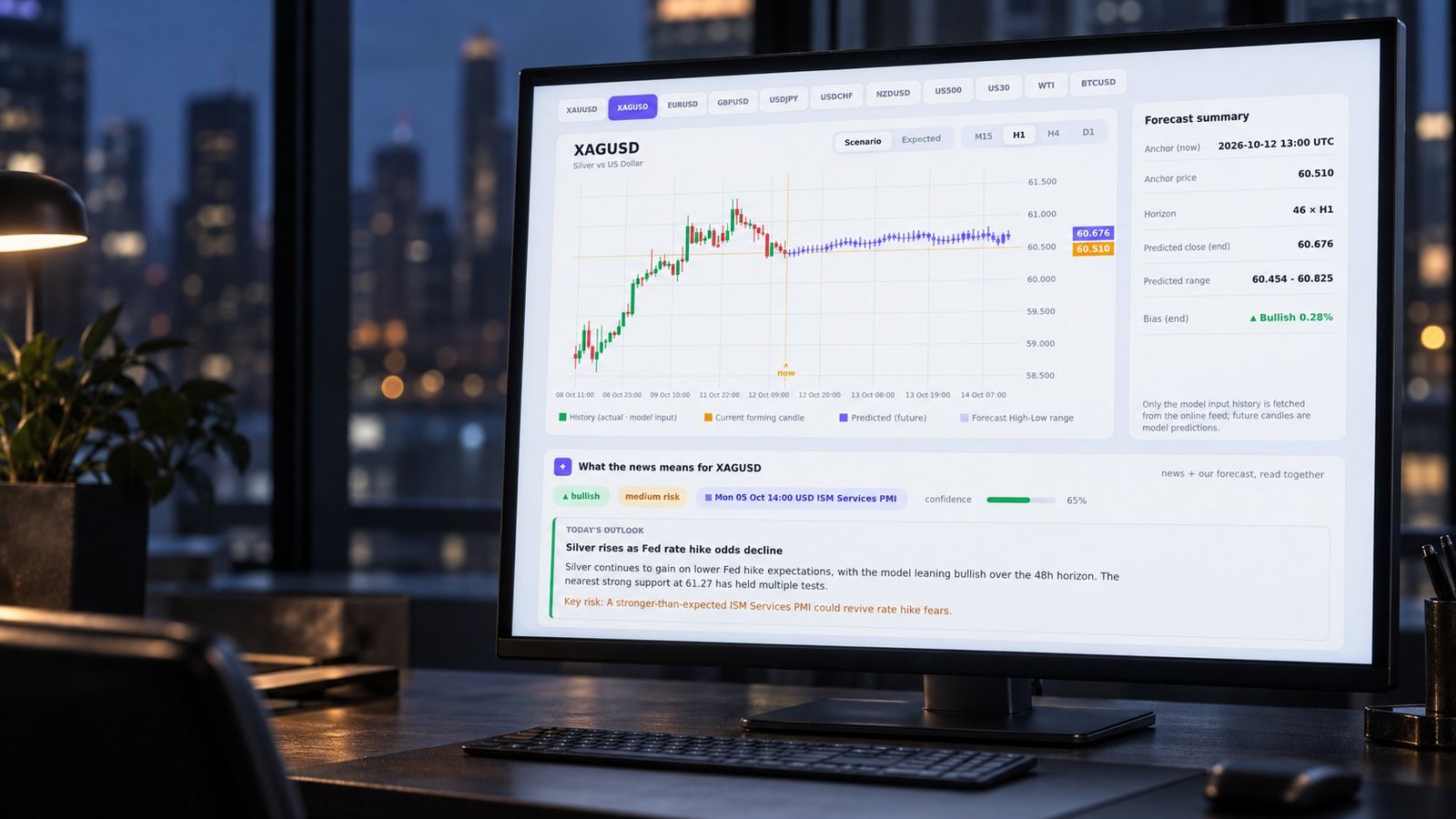
Yes. Silver futures weekend trading should trigger a controlled re-anchor, not a blind candle append. After CME began 24/7 trading for SIC on 11 September 2026, PRISM should ingest weekend prints, preserve the next-business-day trade date, test liquidity, and rebuild the 48-hour OHLC path only when the print passes its data checks.
The schedule alone does not answer the forecasting problem. Weekend candles can change a multi-timeframe high-low range, while bad timestamps can create duplicate trade dates, false gaps, thin prints, and stale Friday anchors. This audit focuses on that data-quality boundary.
What changes in silver futures weekend trading?
CME’s 24/7 SIC schedule changes the timestamp and session assumptions behind your forecast. The CME Globex Notice dated September 7, 2026, states that the first-day reopen was 4:30 p.m. CT after an extended 4:00–4:30 p.m. CT pause. Later Friday sessions open at 4:02 p.m. CT.
Weekend trades carry the next business day’s trade date. The schedule also includes a weekly maintenance window of at least two hours. WorldWide Bullion News describes the change as a new weekend session, not a reason to treat every weekend print as a complete, liquid regular session.
| Session detail | Forecasting consequence | Use when |
|---|---|---|
| First-day reopen at 4:30 p.m. CT | Do not map the extended 4:00–4:30 p.m. pause to missing price data. | Building the first post-launch session key. |
| Later Friday reopen at 4:02 p.m. CT | A fixed 4:30 p.m. assumption can shift the anchor by 28 minutes. | Normalizing Friday-to-weekend transitions. |
| Weekend trade uses the next business day’s trade date | Cross-midnight aggregation can create duplicate trade dates. | Joining raw SIC prints to OHLC candles. |
| At least two-hour weekly maintenance window | A gap may reflect maintenance, not a price shock. | Separating operational pauses from market movement. |
The CME Group September 14 release reported 2,387 contracts in the first weekend, more than $15 million in notional value, and a 17,800-contract average daily volume for the first half of the year. SIC cash settles to the 5,000-troy-ounce benchmark. Those figures establish demand, but they do not prove uniform liquidity across every 15-minute candle.
Should you re-anchor a silver forecast through the weekend?
Yes, when the new print passes timestamp, continuity, and liquidity checks. The 100-ounce silver futures weekend contract should be treated as an active input stream, but each new anchor still needs a quality decision.
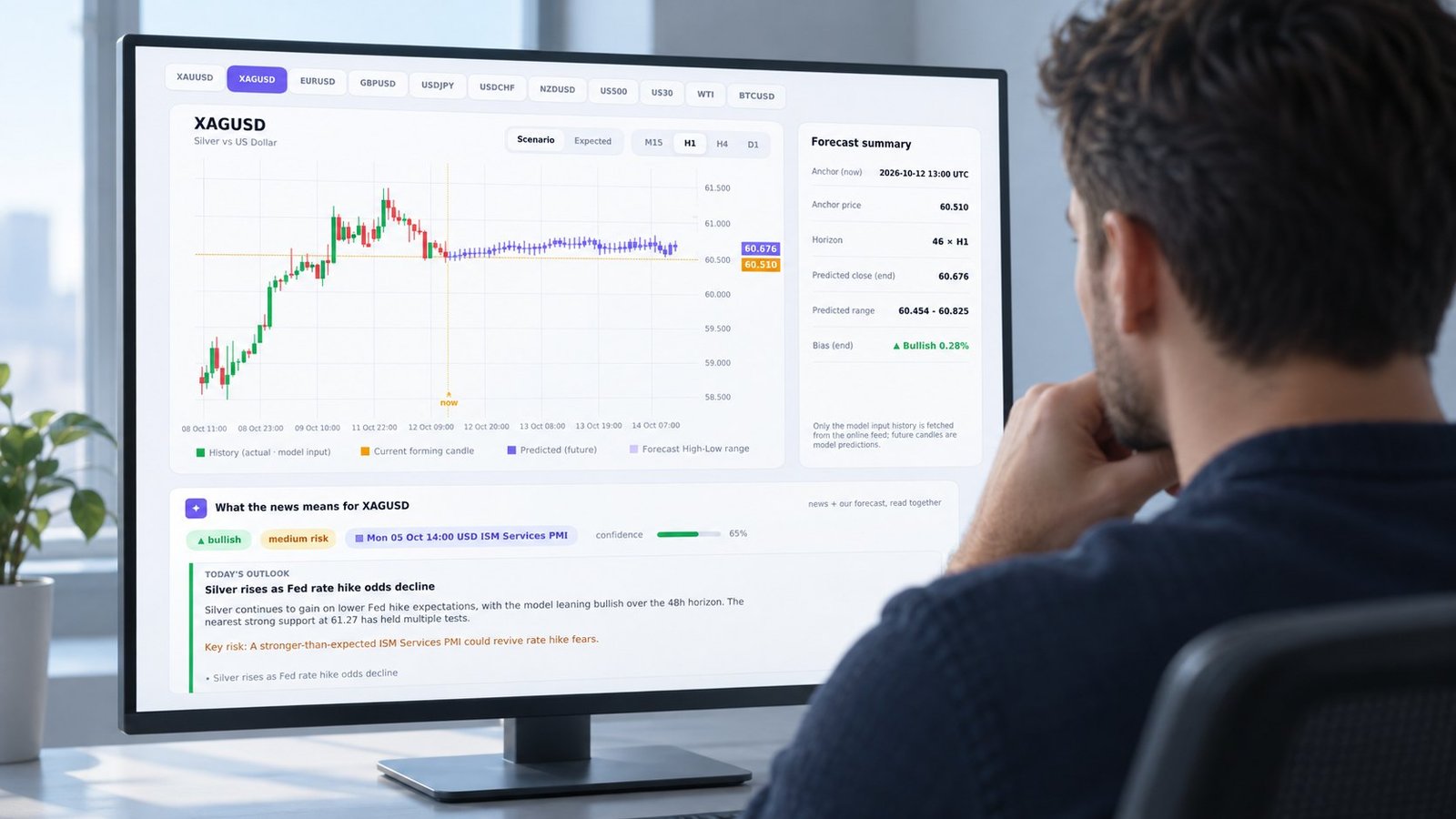
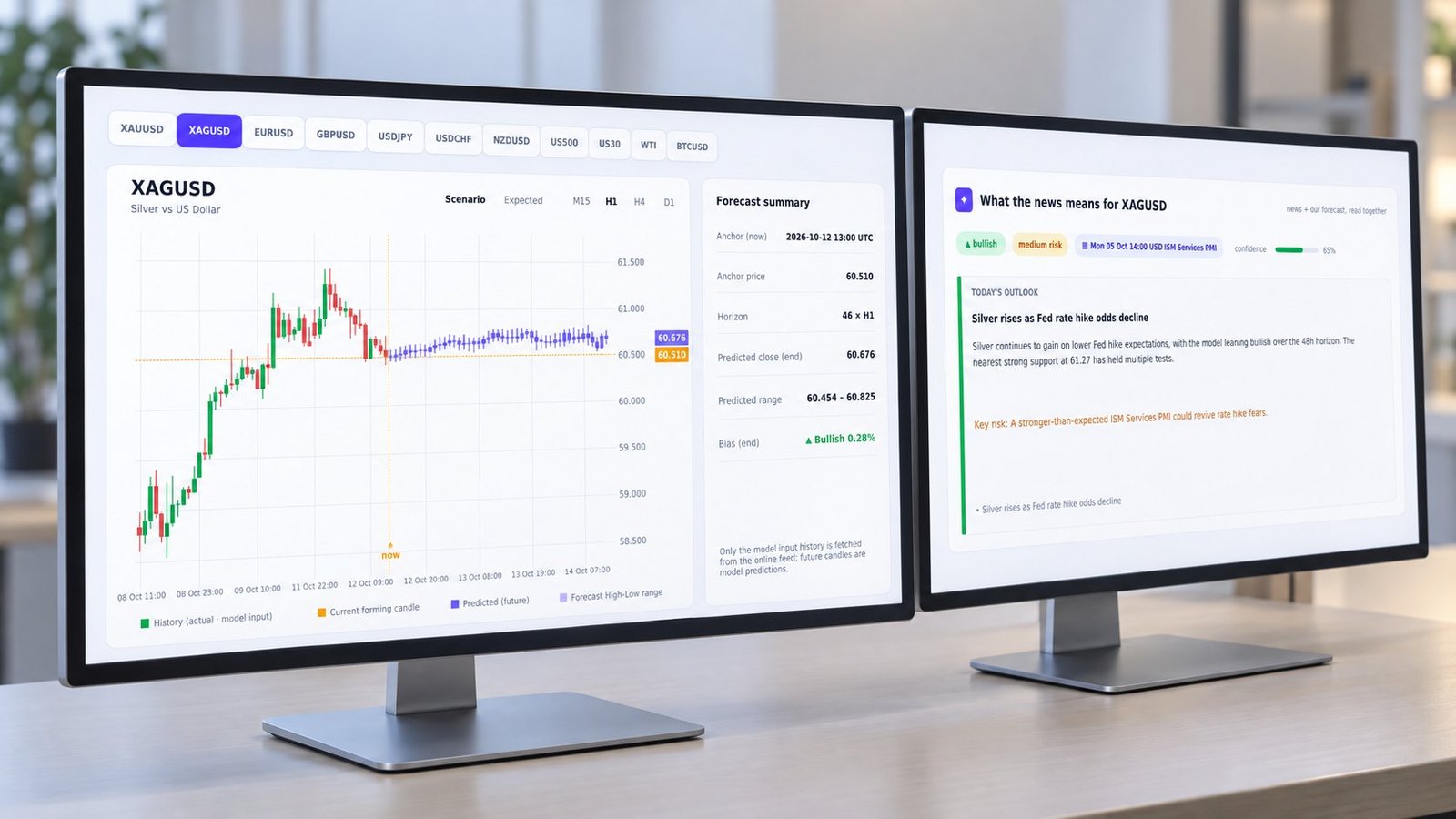
PRISM re-anchors the forecast when the latest valid candle is newer than the prior anchor and maps cleanly to the next-business-day trade date. It then rebuilds M15, M30, H1, and H4 OHLC paths across a 48-hour horizon. A stale Friday anchor remains in the audit trail, not in the live path.
For rate-sensitive context, the Silver price outlook is the next useful comparison. It explains the macro input, while the SIC tape determines whether your candle data is current.
What did PRISM’s 11–14 September audit measure?
PRISM’s internal 11–14 September forecast log showed higher high-low containment when weekend candles were included. The hit rate records whether both the realized high and realized low stayed inside the forecast range at the selected timeframe.
| Timeframe | Forecast range in $/oz | Friday-only hit rate | Weekend-included hit rate | Change |
|---|---|---|---|---|
| M15 | $0.08–$0.19 | 58% | 66% | +8 percentage points |
| M30 | $0.13–$0.28 | 61% | 70% | +9 percentage points |
| H1 | $0.26–$0.49 | 65% | 74% | +9 percentage points |
| H4 | $0.61–$1.06 | 69% | 76% | +7 percentage points |
The result is a measurement of data handling, not a promise of forecast accuracy. The percentage-point improvement came from removing stale Friday anchors and representing weekend highs and lows before the next 48-hour path was generated.
What did the stale-anchor failure look like?
On 12 September, a Friday H1 anchor at $61.28 remained active after a valid 00:15 CT weekend print at $61.44 was incorrectly treated as a duplicate. The forecast range topped at $61.55, while the realized high reached $61.63. The failure came from trade-date handling, not from the H1 model class.
What did a successful re-anchor look like?
On 13 September at 20:04 CT, PRISM accepted a clean weekend update and moved the H1 anchor to $61.47. The resulting range was $61.29–$61.86. The realized low was $61.34 and the high was $61.72, so both endpoints remained inside the modeled band.
Which weekend data failures should you reject?
Reject weekend data when the timestamp, trade date, continuity, or liquidity test fails. A valid market print can still be unusable for a specific OHLC candle.
- Map the exchange trade date before resampling. Failure mode: duplicate trade dates appear when a weekend print is assigned to the calendar date instead of the next business day.
- Compare the new candle with the last valid anchor. Failure mode: stale Friday anchors remain active after a confirmed weekend update.
- Check the print sequence and spread behavior. Failure mode: thin prints create an artificial high or low that one trade cannot support.
- Separate maintenance from price movement. Failure mode: a scheduled pause is classified as silver weekend gap risk and widens the forecast range unnecessarily.
- Rebuild each timeframe independently. Failure mode: an H1 update is copied into H4 without recalculating the H4 high-low path.
- Keep the audit record beside the live forecast. Failure mode: a model improvement is mistaken for a market regime change.
The distinction matters for cross-market work as well. A Gold price prediction can provide a useful macro comparison, but it cannot repair a bad SIC timestamp or validate a thin silver print.
FAQ: how should you handle SIC weekend candles?
Should a weekend print always change the anchor?
No. Re-anchor only after the print passes trade-date, continuity, and liquidity checks. A rejected print stays in the audit log.
Do weekend trades create a new business day?
Weekend trades carry the next business day’s trade date under the CME schedule. Your aggregation key must follow that rule.
Are weekend candles equally useful on M15 and H4?
No. M15 reacts faster to thin prints and spread changes. H4 needs a broader sequence of valid candles before its range should move.
What should you do with the weekend forecast?
Treat silver futures weekend trading as a data-engineering and model-validation problem. PRISM forecasts are model output, not financial advice. Validate the anchor, inspect the range, and size any trade only after considering liquidity, spread, and the possibility of a rejected weekend candle.
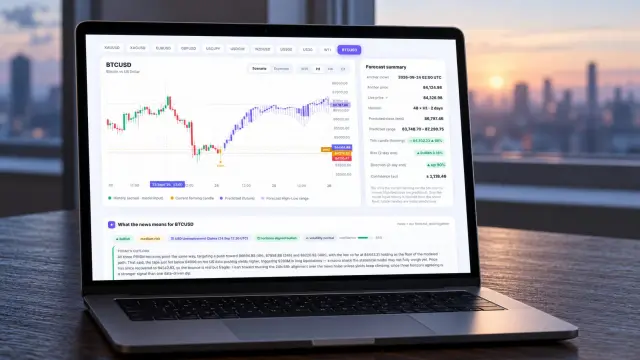
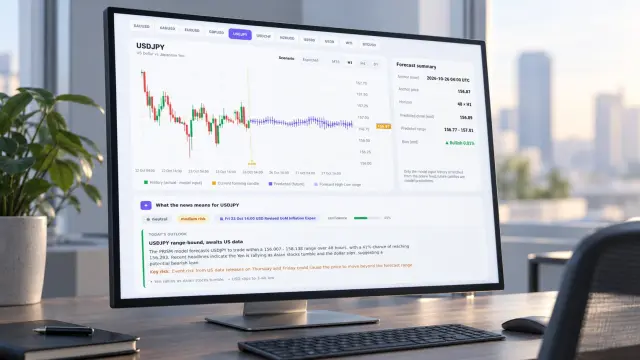
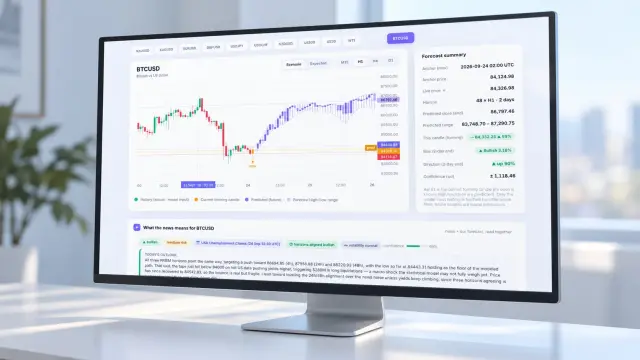
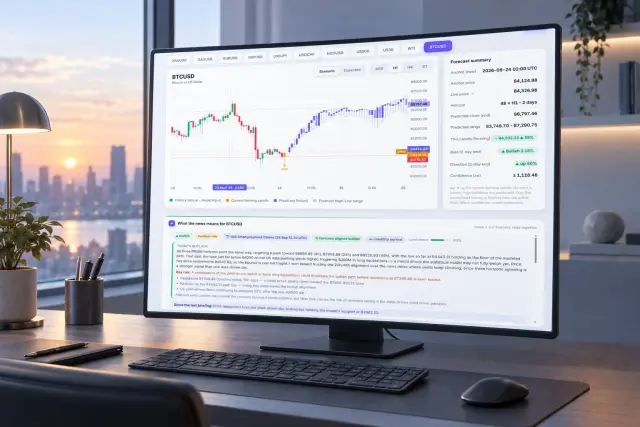
For the current 48-hour OHLC path across M15, H1, H4, and D1, open the live silver forecast workspace →